Pentest
Continuous coverage
How continuous pentesting works in Trace, from recurring runs and one list of findings to coverage you can check and attack leads you submit yourself.
A one-time pentest tests your applications once and ends in a report. With continuous coverage, Trace keeps testing them as your code changes, so your findings stay current. You also get one official pentest report a year from an OSCP or CISSP engineer, which can stand in for your annual pentest. See Pricing.
How it works
You set up your applications the same way you would for a one-time pentest. The Trace team then sets a testing schedule with you. Findings and coverage from earlier one-time pentests carry over.
Each run reads the code that changed, looks for new attack paths, and tries to exploit them against your running application. It skips anything that repeats a finding you already have. See Verified findings.
What you get
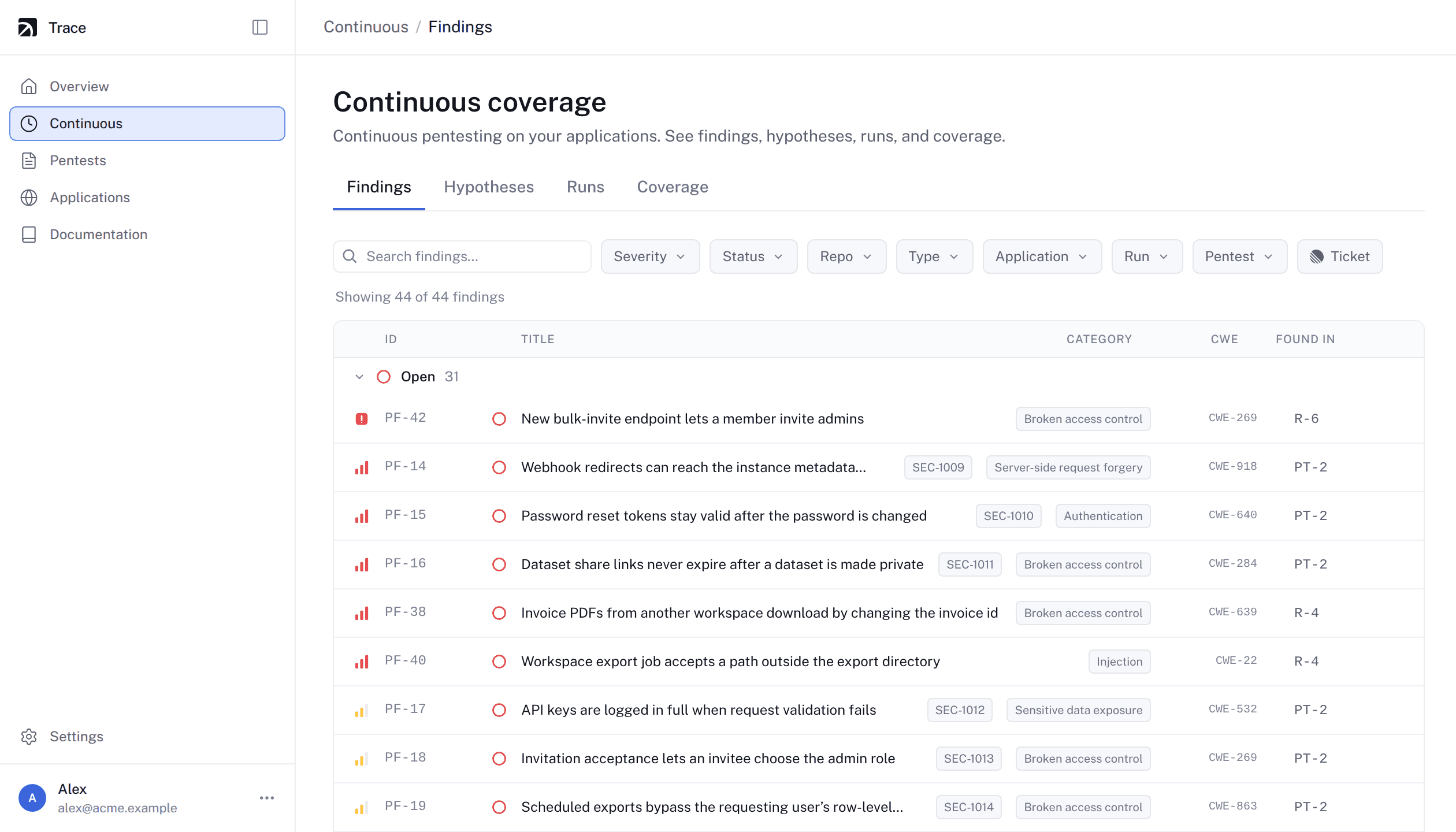
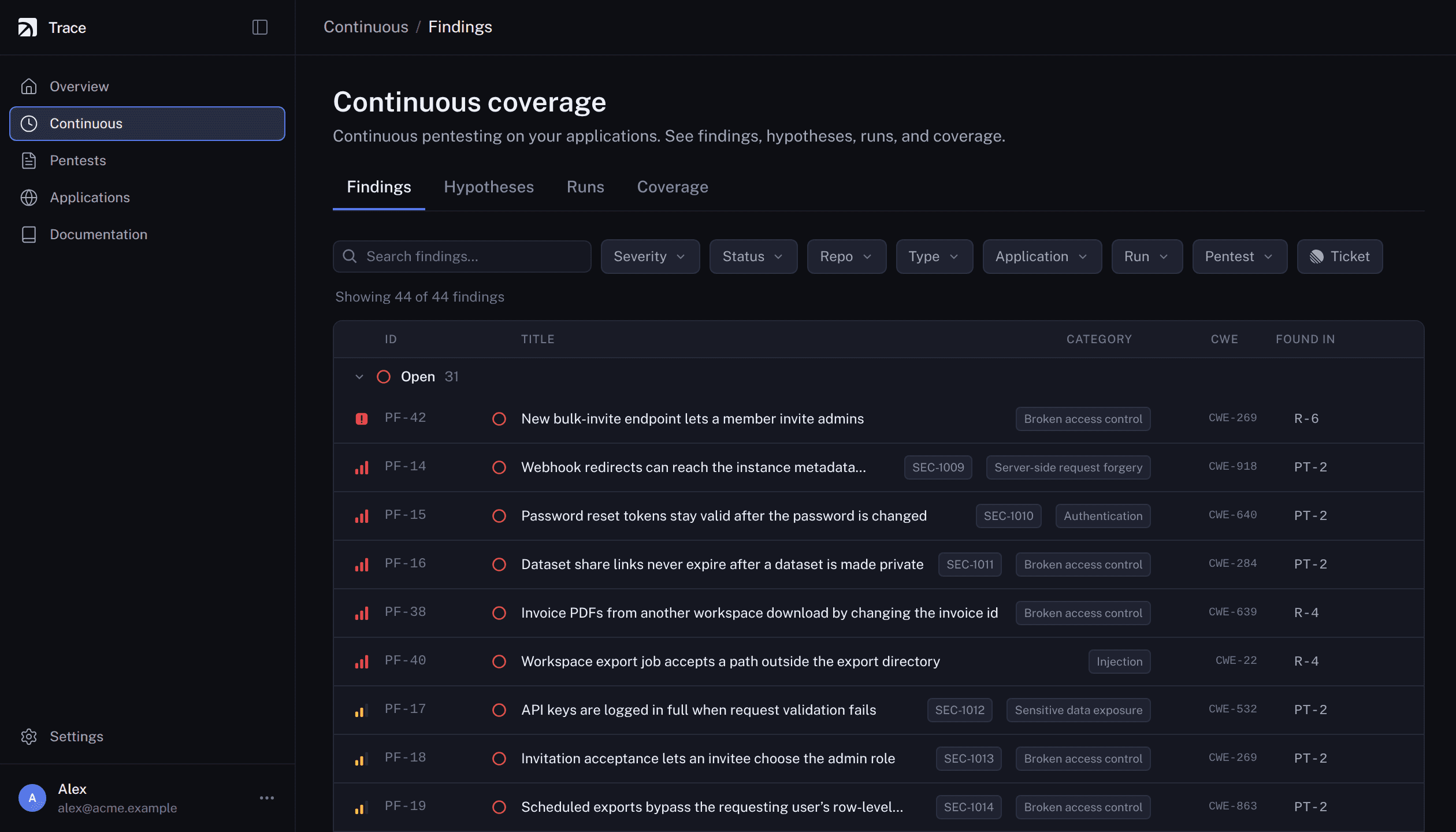
- One list of findings. Every finding Trace has published, from every run and every one-time pentest, in one place in your dashboard.
- A record of each run. See what each run found and how far along it is.
- Proof of coverage. See which features and API endpoints Trace has tested, and which it hasn't yet.
- Your own leads tested. Send Trace an attack you suspect, and the next run tests it.
Submitting hypotheses
A hypothesis is an attack you think might work against your application. Submit one, and the next run tests it. Leads can come from your own team, another security tool, or a report from an outside researcher. Each one goes through the same checks as Trace's own leads, so you have one place to triage them all.
Submit leads with the Trace CLI:
tracecli pentest hypothesis submit \
  --title "IDOR on /exports/:id" \
  --description "Any signed-in user can fetch another tenant's export by ID."
Fixing and retesting findings
Every finding comes with a full remediation recommendation, with references to the code that needs to change. Mark a finding Remediated once your fix is deployed, and Trace retests it. There's no limit on retests. You can also accept or dispute a finding. See How an engagement works.